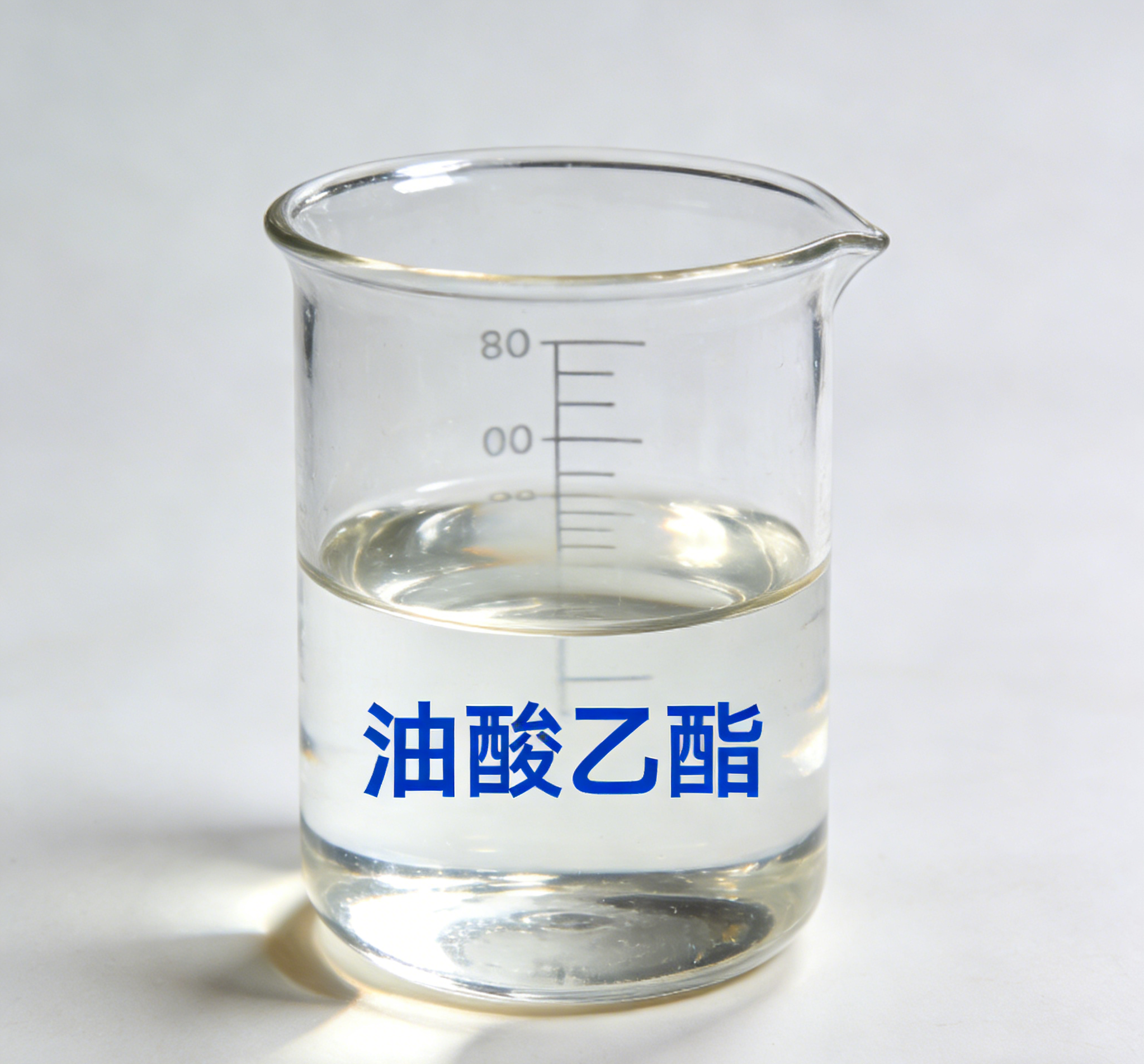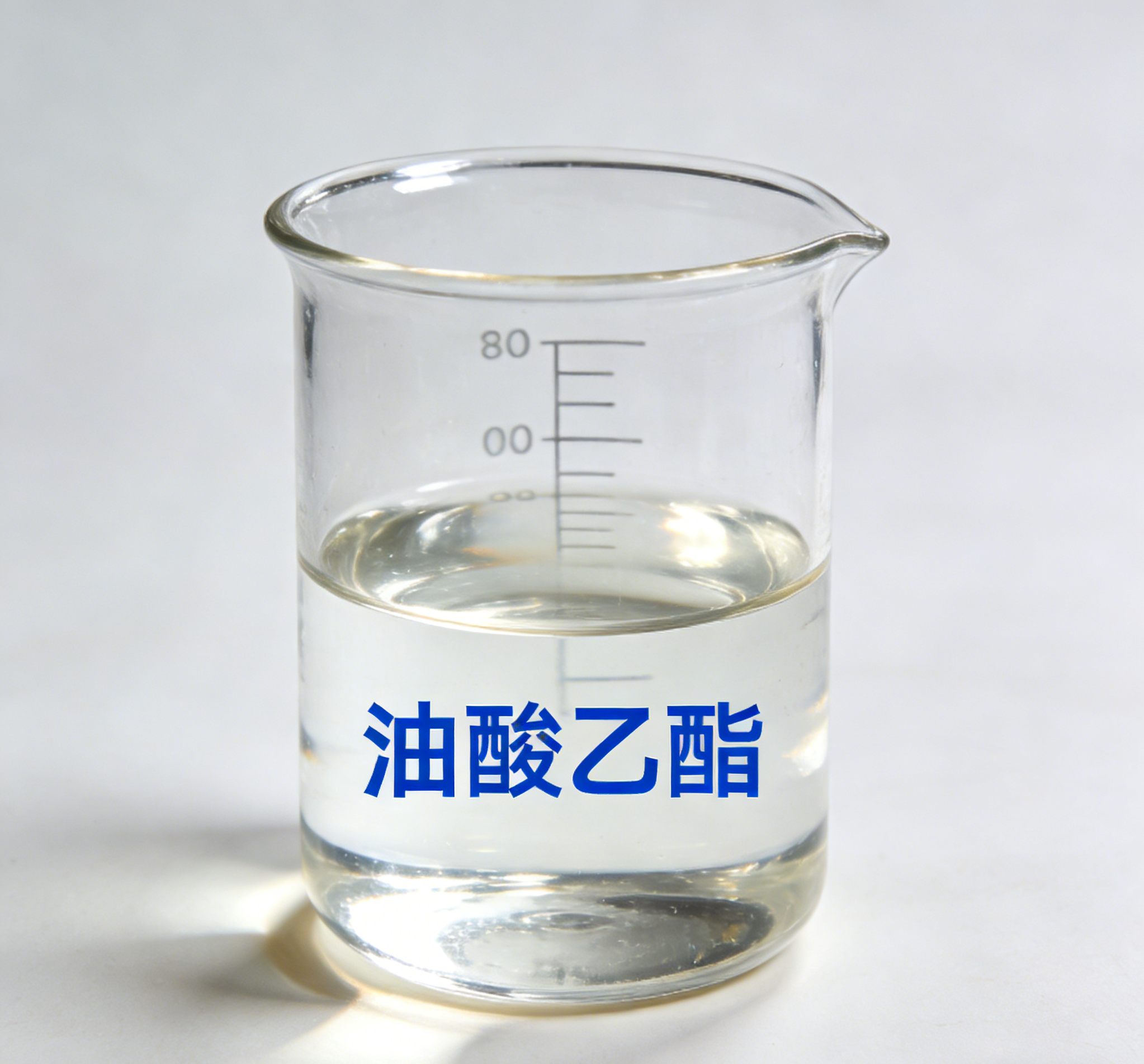
Ethyl oleate
CAS number:111-62-6
Molecular formula:C₂₀H₃₈O₂
Product Alias:Ethyl oleate、cis-9-Octadecenoic acid ethyl ester、Octadecenoic acid ethyl ester
Ethyl oleate is a colorless to pale yellow transparent oily liquid, belonging to the unsaturated fatty acid ester category. It possesses excellent solubility, lubricity, emulsifying properties, and biodegradability. It is non-irritating, has good compatibility, and is easily biodegradable, meeting environmental protection requirements. It is widely used in the daily chemical, pharmaceutical, food, chemical, textile, and metal processing industries, and is a commonly used multifunctional ester additive. It is available in different specifications (food grade, industrial grade, and daily chemical grade) to suit various applications.
1. Cosmetic & Daily Chemical Industry
* **Basic Oil Raw Materials:** Used in skincare products such as face creams, lotions, hand creams, and body lotions as emollients and softeners. They form a thin protective film on the skin's surface, locking in moisture, improving smoothness, and eliminating stickiness.
* **Makeup Raw Materials:** Added to lipsticks, eyeshadows, and foundations as plasticizers and solvents. They improve the spreadability and application of the product, preventing dryness and flaking.
* **Hair Care Products:** Used in shampoos, conditioners, and shower gels as emulsifiers and conditioning agents. They enhance hair softness, reduce dryness and frizz, and improve the emulsification stability of these products.
2. Pharmaceutical Industry
Pharmaceutical Excipients: Used as solvents, solubilizers, and carriers to dissolve lipid-soluble drugs (such as vitamins A/D/E, antibiotics, and steroids), improving drug bioavailability. Used in the preparation of oral capsules, suspensions, and ointments.
Topical Preparations: Used in burn ointments, antipruritic ointments, and liniment ointments as a matrix and transdermal penetration enhancer, helping drugs penetrate the skin better while providing moisturizing and soothing effects.
Injectable Excipients: Ethyl oleate meeting pharmaceutical-grade standards can be used as a cosolvent in some injectable preparations to improve the solubility of lipid-soluble drugs.
3. Food Industry
Food Additives: Used as food-grade plasticizers, release agents, and lubricants in the production of pastries, baked goods, and candies to improve the texture and smoothness of food. They can also be used as plasticizers in food packaging films, meeting food contact material safety standards.
Food Flavor Solvents: Dissolve fat-soluble food flavorings and fragrances for flavoring beverages, dairy products, and baked goods, resulting in more even dispersion and longer-lasting aroma.
Nutritional Fortification Carriers: Used as carriers for fat-soluble vitamins and unsaturated fatty acids, added to meal replacements, oral nutritional solutions, and infant complementary foods (meeting national standard limits).
4. Chemical & Rubber-Plastic Industry
Environmentally Friendly Plasticizers: Used in resins such as polyvinyl chloride (PVC), cellulose acetate (CA), and nitrocellulose (NC) as auxiliary plasticizers, replacing some phthalate plasticizers, improving the flexibility and film-forming properties of soft plastics, films, and coatings, and exhibiting superior biodegradability;
Coating/Ink Solvents: Used in oil-based coatings, printing inks, and wood coatings as co-solvents and leveling agents, improving coating leveling and film smoothness, reducing system viscosity, and enhancing the printability of inks;
Polymer Modifiers: Added as modifiers to rubber and plastics to improve the low-temperature resistance and flexibility of products, suitable for the production of soft rubber products and plastic films.
5. Textile & Leather Industry
Textile auxiliaries: Used for softening and waterproofing fabrics, acting as softeners and emulsifiers to improve the softness and drape of cotton, synthetic fiber, and wool fabrics, while also enhancing their waterproofness.
Leather finishing agents: Used as leather fatliquoring agents and finishing agents, penetrating leather fibers to improve the leather's softness, elasticity, and luster, preventing cracking and hardening. Suitable for processing genuine leather and synthetic leather.
6. Metal Processing & Other Industrial Uses
Metal Processing Auxiliaries: Used in metal cutting fluids, wire drawing oils, and rust-preventive oils as lubricants and rust inhibitors, improving lubrication, reducing wear during metal processing, and forming a protective film on the metal surface for short-term rust prevention;
Feed Industry: Used as a feed additive, acting as a carrier of fat-soluble vitamins and trace elements, improving the nutrient absorption efficiency of feed, suitable for poultry, livestock, and aquatic feed;
Fragrance Industry: Used as a raw material in the synthesis of daily chemical fragrances and industrial fragrances, and can also be directly added as a fragrance to soaps and aromatherapy products, providing a slight, oily fragrance.
Application field