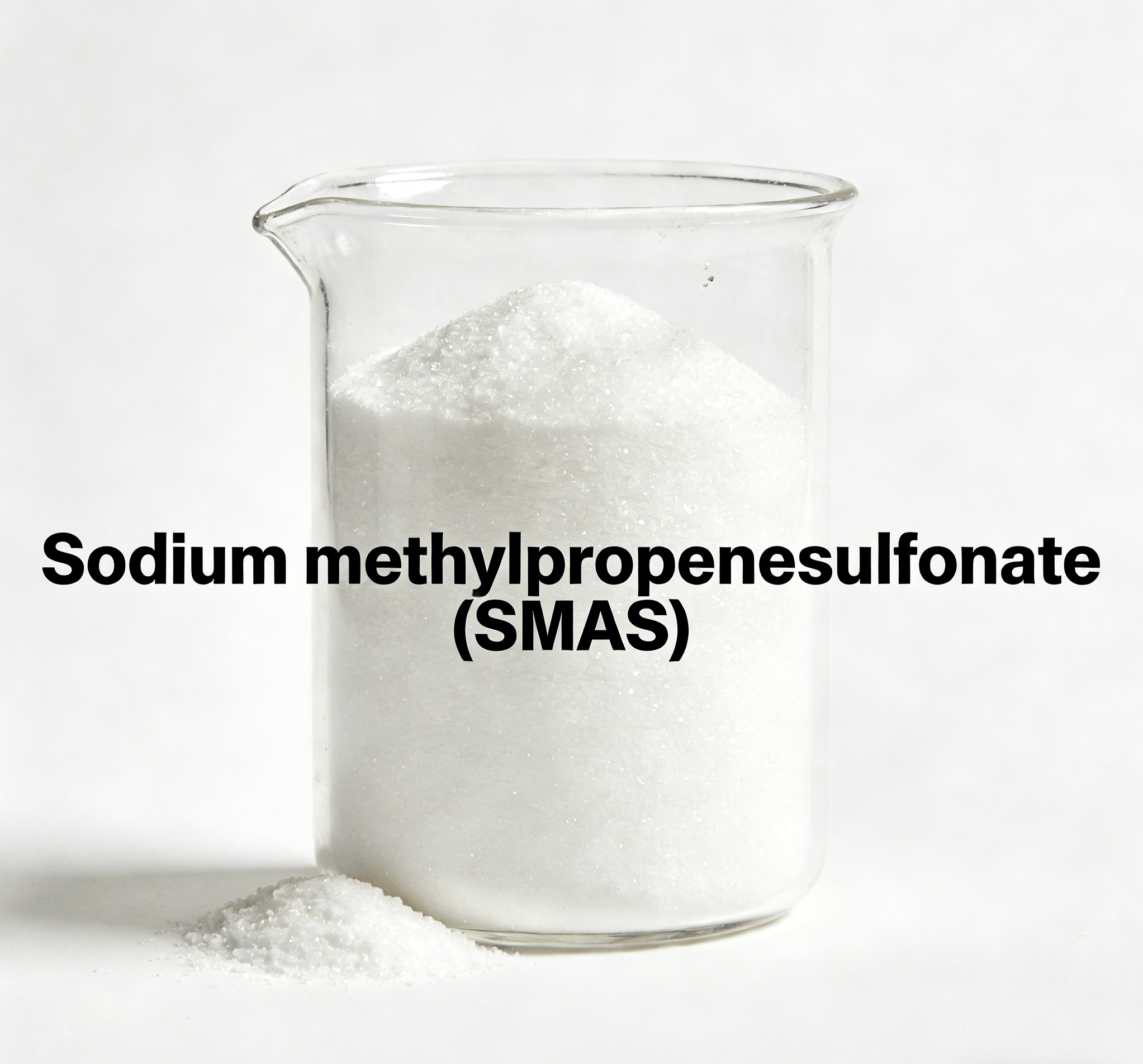
Sodium methylpropenesulfonate (SMAS)
CAS number:1561-92-8
Molecular formula:C₄H₇NaO₃S
Product Alias:2-Methyl-2-propenesulfonic acid sodium salt、Sodium methallylsulfonate、MSA、SMAS
Sodium methacrylate sulfonate (MSA/SMAS) is a water-soluble anionic monomer with excellent hydrophilicity, heat resistance, salt resistance, and polymerization activity. It readily copolymerizes with monomers such as acrylic acid, acrylamide, and styrene, and is widely used in water treatment, petrochemicals, textile printing and dyeing, daily chemicals, and building materials industries. It is a commonly used polymerization modifier in export chemicals, with different specifications suitable for different industrial applications.
1. Water Treatment Industry: As a comonomer for water treatment agents, it is copolymerized with acrylamide, acrylic acid, etc., to produce polyacrylamide (PAM) modified flocculants and scale inhibitors/dispersants;
✅ Used for scale inhibition and corrosion inhibition in industrial circulating water, power plant boiler water, and oilfield injection water, improving the temperature resistance, salt resistance, and dispersibility of water treatment agents, and preventing the deposition of calcium, magnesium, and iron scale;
✅ In municipal sewage and industrial wastewater treatment, it enhances the sludge dewatering effect of flocculants and improves water purification efficiency.
2. Petrochemical & Oilfield Exploitation
* Oilfield Drilling/Production Additives: Preparation of thickeners, filtration reducers, and oil displacement agents for oilfield use, improving drilling fluid stability, reducing filtration loss, and simultaneously increasing the oil displacement efficiency of tertiary oil recovery, thereby increasing crude oil recovery rate.
* Oil Additives: Used for modifying lubricating oils and fuels, improving their anti-wear and anti-oxidation properties, and enhancing low-temperature fluidity.
3. Textile Printing and Dyeing Industry
* Textile Sizing Modification: As a sizing copolymer monomer, it prepares highly absorbent and highly adhesive textile sizing agents, suitable for sizing cotton, chemical fiber, and blended fabrics, improving the wash resistance and weaving efficiency of the sizing agent, and reducing yarn breakage.
* Printing and Dyeing Auxiliaries: Synthetic dispersants, leveling agents, and fixing agents, improving the dispersibility and leveling properties of dyes on fabrics, enhancing color fastness, and reducing color variations and uneven coloring.
4. Daily Chemical & Papermaking Industry
Daily Chemical Raw Materials: Copolymerizing with acrylic monomers to prepare superabsorbent polymers (SAPs), used in products such as diapers, sanitary napkins, and absorbent wipes to improve absorbency and water retention; also used for thickening and modifying shampoos and shower gels to improve the feel and stability of these products.
Papermaking Additives: Synthetic paper strengthening agents, retention aids, and filtration aids to improve the dry and wet strength of paper, increase the retention of fillers and fibers, reduce white water concentration, and improve papermaking efficiency and paper quality.
5. Building Materials & Polymer Modification
Building Material Admixtures: Core monomers used in the synthesis of polycarboxylate superplasticizers (PC), used to prepare high-performance concrete superplasticizers. These admixtures improve the dispersibility and slump retention of superplasticizers, reduce the water-cement ratio of concrete, and enhance the strength and durability of concrete. They are widely used in high-speed rail, bridges, high-rise buildings, and other engineering projects.
General Polymer Modification: Added as modifying monomers to plastics, rubbers, and resins to improve the hydrophilicity, antistatic properties, and heat resistance of products. Suitable for the production of antistatic plastics, hydrophilic coatings, and heat-resistant rubbers.
6. Other Industrial Uses
Electroplating Industry: Prepares electroplating brighteners and leveling agents to improve the smoothness and gloss of electroplated layers and reduce defects such as pinholes and pitting.
Paint Industry: Synthesizes film-forming aids and dispersants for water-based coatings, enhancing their water resistance and scrub resistance, and improving pigment dispersibility.
Ion Exchange Resins: Used as functional monomers to synthesize special ion exchange resins for precious metal extraction and heavy metal ion removal from wastewater.
Application field
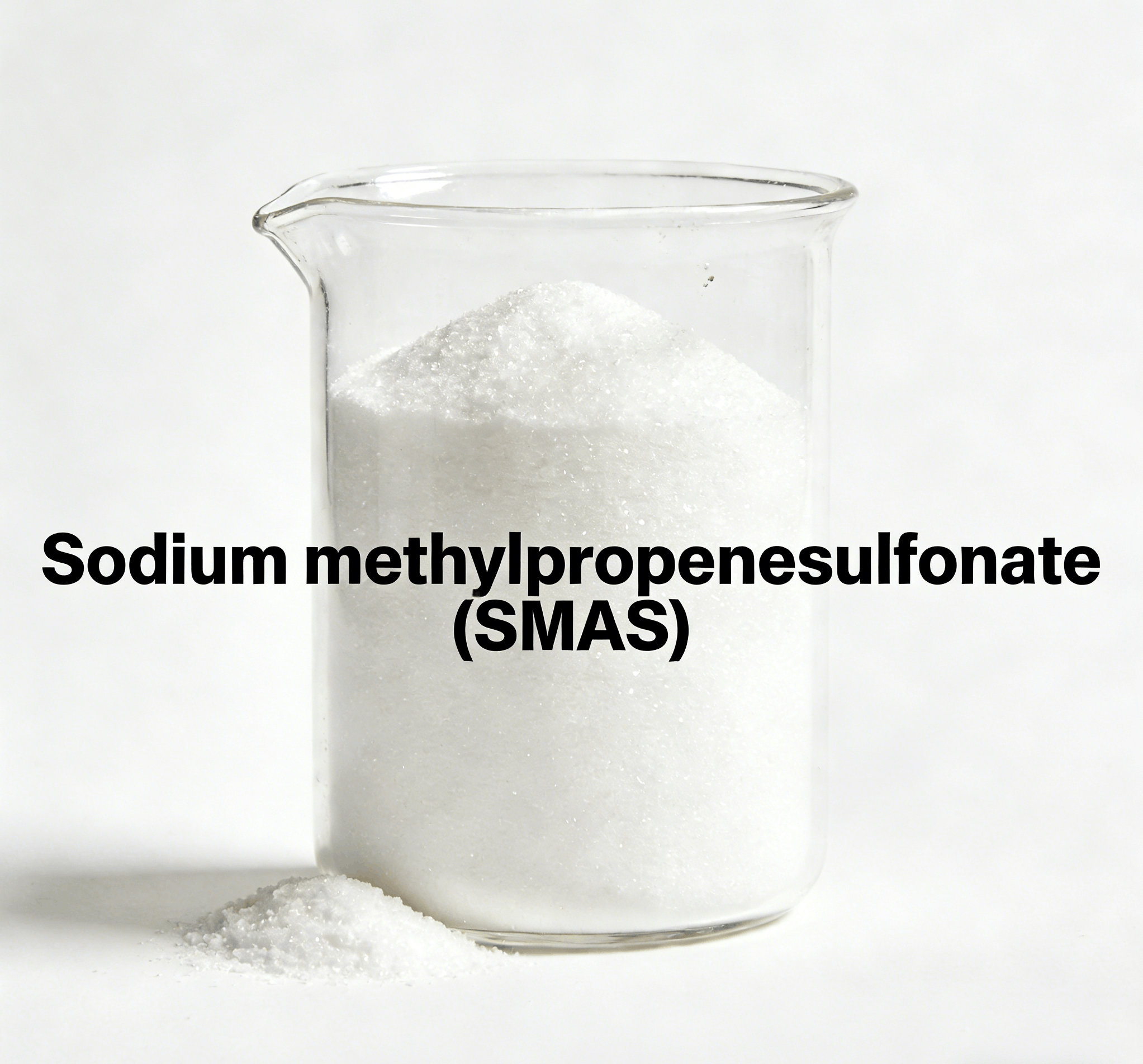
Sodium methylpropenesulfonate (SMAS)
DOWFAX 2A1 Solution